
Most dental plans pay 100% for preventive care, 80% for basic care, and 50% for major care.
Most dental insurance plans also stop paying once you reach a yearly limit. So, what does dental insurance cover in real life? Cleanings and checkups, usually in full. Fillings, mostly. Crowns and other big work, about half, and only until your yearly limit runs out.
That’s why so many Fort Myers, FL patients get a bill after a crown, even with coverage. Some snowbird plans from Ohio or Michigan also have few local network dentists. McGregor Dental at McGregor Point answers these questions every week. Here’s how your plan really works, in plain words.
TL;DR
- Most dental plans follow the 100/80/50 rule: 100% for cleanings, 80% for fillings, and 50% for crowns. You pay the rest after your deductible.
- Your yearly maximum is the most your plan pays in a year, often $1,000 to $1,500. One crown and one root canal can use most of it.
- Most plans don’t cover whitening, veneers, or adult braces, and many skip implants. Major work often has a 6- to 24-month waiting period.
- Original Medicare doesn’t cover routine dental care, so many retirees in Fort Myers need a separate dental plan. Discount plans are another low-cost choice.
- McGregor Dental on McGregor Blvd helps you understand your benefits and offers CareCredit for costs your plan won’t pay. Call (239) 590-9919 to book.
How Does Dental Insurance Work?
You pay a monthly fee, and your plan shares the cost of care until it hits a yearly limit. Dental insurance works differently from your medical plan. Health plans protect you from huge bills.
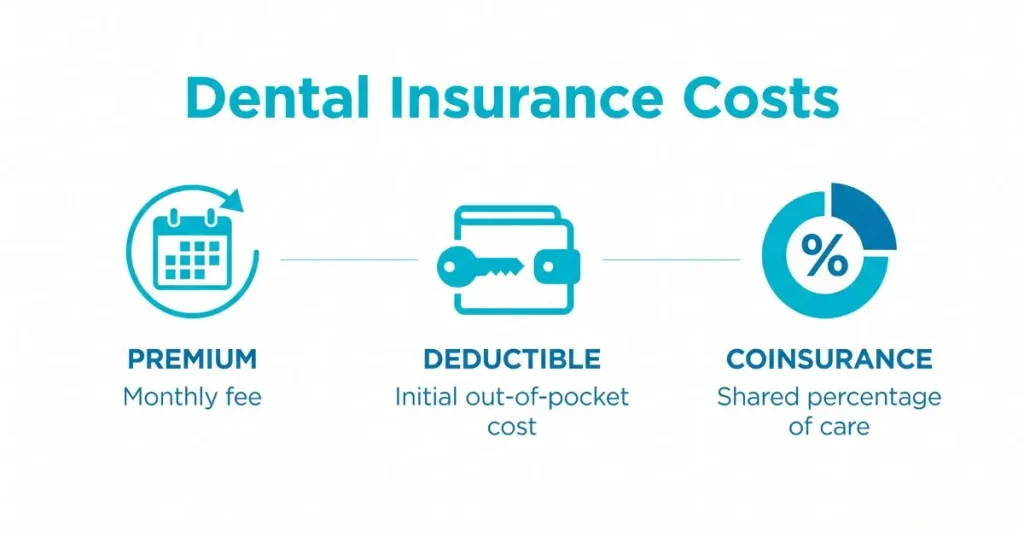
Dental plans mainly help pay for regular dental services, up to a set amount. Your dental coverage may also change each year, so read your plan summary every fall. Five numbers decide what you pay.
Premium
This is the monthly fee you pay to keep your plan active. A full individual dental insurance plan averages about $47 a month. On individual insurance, preventive-only plans run closer to $26.
Deductible
This is what you pay first, before your plan starts sharing costs. Most deductibles fall between $25 and $100 per person. Many plans waive it for cleanings and exams.
Coinsurance
This is your share of the bill after the deductible. If your plan covers a filling at 80%, you pay the other 20%. How much your insurance covers changes with the type of dental work.
Annual Maximum
This is the most your plan pays in one year, often $1,000 to $1,500. That limit has barely moved in decades, while the cost of dental care keeps climbing. About 12% of insured adults reached their limit in 2024.
In-Network vs Out-of-Network
In-network dentists agree to lower fees, so you pay less. Out-of-network, your insurance pays less, and the insurance company pays a smaller share of a higher fee. Always check your network before booking.
What Are the Types of Dental Insurance Plans?
The main types are PPO, HMO, traditional plans, and discount plans, and each one pays differently.
Knowing the types of dental insurance helps you pick the right dental plan. Each type of plan trades price for choice. Here’s a quick look at the different types of dental insurance.
| Type of Plan | How It Works | Best For |
| Dental PPO | You can see any dentist, but using in-network providers costs less | People who want choice |
| Dental HMO (DHMO) | You use one assigned dentist, often with low fees | People on a tight budget |
| Traditional (indemnity) dental plan | You pick any dentist, and the plan pays a set share | People who split their time between states |
| Discount plan | Not insurance, just lower prices at member dentists | People who need work right away |
A PPO plan is the most common choice. A dental preferred provider organization gives you the most freedom. PPO dental plans from big names like Delta Dental are sold all over Florida. Delta Dental companies work together through the Delta Dental Plans Association, a national network.
Dental insurance companies come in all sizes. Many sell plans through a life insurance company, the same kind of company that sells accident insurance and critical illness insurance. Carriers like The Standard Insurance Company also sells dental plans. Some plans offer higher yearly limits for a higher premium. Your plan may also add vision. Many employers bundle dental and vision plans with your health plan.
Fine print matters too. Look for a line that says “insurance products are underwritten by” a named company. That tells you who really pays your claims. Before you sign, ask any American insurance company for its full plan summary.
What Does Dental Insurance Cover? The 100/80/50 Rule
Plans pay the most for prevention and the least for big repairs.
Insurance companies set plans up this way on purpose. A $150 cleaning today can stop a $1,200 crown later. Most PPO plans follow these three levels.
| Tier | Plan Pays | Common Examples |
| Preventive | 100% | Cleanings, exams, X-rays |
| Basic | 80% | Fillings, simple extractions, and often root canals |
| Major | 50% | Crowns, bridges, dentures |
Preventive Care (100%)
Two cleanings a year, exams, and X-rays usually cost you nothing. Preventive dental care gives you the most value for your premium.
Basic Care (80%)
This tier covers fillings and simple extractions. Basic dental care handles most common, minor repairs. See current tooth extraction costs in Fort Myers.
Major Care (50%)
Crowns, bridges, and dentures sit in this tier. On a $1,200 crown, your plan pays about $600. That $600 also counts toward your yearly limit.
Many dental plans list root canals as major care instead of basic. Learn how the visit works in Root Canal Treatment What to Expect.
Does Dental Insurance Cover Deep Cleanings and Gum Treatment?
Some plans count deep cleanings and gum treatment as basic or major care instead of preventive care, so your share can be higher than for a routine cleaning. Ask your insurer how your plan classifies it, and see our guide to gum disease treatment costs.
What Dental Insurance Usually Doesn’t Cover
Most plans skip cosmetic work, many skip implants, and most stop paying past your yearly limit.
Insurance coverage focuses on healthy teeth, not on how they look. Most dental insurance policies list their exclusions on one page. Here’s what most plans do not cover:
• Cosmetic care: whitening and veneers
• Implants: many standard plans leave them out
• Adult braces: most plans limit orthodontics to kids
• Costs past your yearly maximum: you pay the full fee after that
• Work during a waiting period: basic care often waits 6 months, and major care up to 24 months
What Is a Missing Tooth Clause in Dental Insurance?
Some plans include a missing tooth clause, which means the plan may not pay to replace a tooth you lost before your coverage started. Not every plan has one, so ask your insurer before you plan an implant or bridge.
Your health insurance coverage won’t fill these gaps either. Most medical insurance plans do not cover dental care, so you need a separate dental plan.
Does Medicare Cover Dental Care?
Medicare works the same way. The Medicare.gov dental services page confirms that Original Medicare doesn’t cover most dental services, like cleanings, fillings, and dentures. Many Fort Myers retirees buy supplemental dental insurance or pick a Medicare Advantage plan with dental benefits.
Is Dental Insurance Worth It Long Term?
Yes, for most people, because covered checkups catch small problems before they turn into big bills.
Here’s a simple example of how dental care costs grow. A small cavity costs about $200 to fill. Left alone, it can grow into a root canal and a crown that costs $2,700 or more. Routine dental visits find that cavity early, and your plan usually pays for the visit.
When Insurance Pays Off Most
Families with kids, people with dental issues, and anyone with known dental needs get the most value. Regular dental care keeps your dental health steady and your bills smaller.
When Dental Insurance May Not Pay Off
A big treatment can use up your yearly limit in one visit, leaving more dental work for you to pay. Long waiting periods also hurt if you need dental care right away. Skipping dental visits wastes the premium you pay every month.
Our general dentistry services include the cleanings and exams most plans pay for in full.
How to Get the Most From Your Dental Benefits
Use your benefits before they reset, ask for an estimate, and spread big work across two plan years.
Many insurance companies reset dental benefits on January 1, and unused money disappears. That makes October through December a smart time to get dental care. These steps help you manage dental costs and lower your dental expenses:
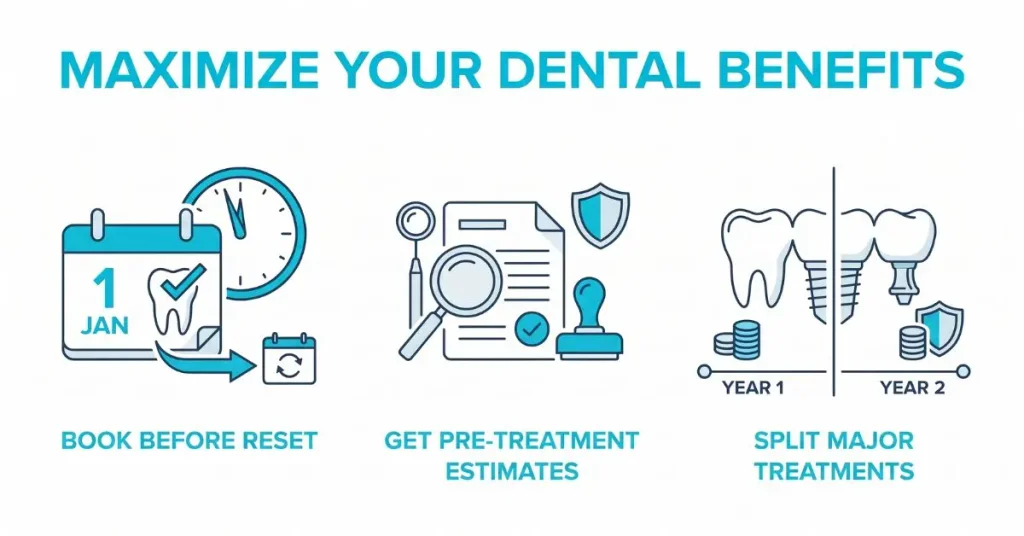
• Book before the reset: Use this year’s limit while you still have it.
• Ask for a pre-treatment estimate: Your dentist sends the treatment plan to your insurer first.
• Split big treatment: A root canal in December and a crown in January can use two yearly limits.
• Use dual coverage: Two plans won’t double your benefits, but they can lower what you owe.
• Stay in-network: Network fees shrink your share.
• Snowbirds: Check that your out-of-state plan has Fort Myers network dentists.
Still have a gap after insurance? See our Financing Options for monthly payment choices.
Dental Insurance vs Discount Plans: Which Fits You?
Insurance suits people who want help with regular care, while discount plans suit people who need work right away.
Dental discount plans aren’t insurance. You pay a yearly fee and get lower prices at member dentists. They have no yearly limit and no waiting period, which helps if you need a crown next month.
| Feature | Dental Insurance | Discount Plan |
| Cost | Monthly premium | About $80 to $200 a year |
| Yearly maximum | Yes, often $1,000 to $1,500 | None |
| Waiting periods | Often, for basic and major care | None |
| Savings | Plan pays a percent of the bill | 10% to 60% off listed fees |
No group dental plan at work? Compare private dental insurance, health insurance marketplace plans, and discount dental programs with a licensed insurance agent. NIDCR also lists low-cost dental care.
How McGregor Dental Helps You Use Your Insurance in Fort Myers
Our team explains your benefits before treatment, so you know your out-of-pocket cost ahead of time. McGregor Dental sits at 15271 McGregor Blvd, Suite 21, near Cypress Lake, Iona, and Whiskey Creek. Patients also come from Fort Myers Beach and Cape Coral.
• Plain answers: We help you understand your insurance and what you’ll owe.
• Same dentist every visit: Dr. Jeffrey Bourne knows your history and your goals.
• Help with gaps: CareCredit covers costs your insurance plan won’t pay.
• One office for most care: Cleanings, fillings, crowns, and implants all happen here.
Save time at check-in by visiting our Forms & Insurance page first.
Frequently Asked Questions About Dental Insurance in Fort Myers
Why Do I Still Have to Pay if I Have Dental Insurance?
Most plans pay only part of basic and major care. You also cover the deductible and any costs above your yearly maximum. On a crown covered at 50%, you pay the other half. Checking your coinsurance, deductible, and remaining yearly limit before treatment helps you avoid surprise bills.
Does Dental Insurance Cover Implants?
Many standard plans leave implants out. Some pay the bridge price instead, which plans call an alternate benefit. Because coverage varies by plan, ask your insurer for a pre-treatment estimate before booking. Our team can help you review your benefits and explain what you would owe.
What Does Dental Insurance Cover for Root Canals?
Most plans pay 50% to 80% of a root canal after the deductible. The crown that follows usually falls under major care at 50%. Unsure whether to save the tooth? Compare root canal and extraction options, and check your yearly limit first.
Does Dental Insurance Cover Dentures?
Yes, most plans list dentures as major care and pay about 50%. Waiting periods for major work often apply, so check your start date. Your yearly maximum also applies, and a pre-treatment estimate shows what you would owe before treatment begins.
Is a Dental PPO Better Than a Dental HMO?
A PPO gives you more dentist choices but costs more. An HMO costs less, but you must use your assigned dentist. PPO plans also cover out-of-network visits. The better fit depends on whether keeping your current dentist or securing a lower monthly cost matters more to you.
Does Florida Medicaid Cover Adult Dental Care?
For adults 21 and older, Florida Medicaid covers emergency care and dentures, plus some extra care with prior approval. Children and teens under 21 receive broader dental benefits.
Can I Use My Out-of-State Dental Insurance in Fort Myers?
It depends on your plan’s network. In-network dentists agree to lower fees, so you pay less. Out-of-network visits cost more because your plan pays a smaller share of a higher fee. Before booking, ask your insurer whether it lists Fort Myers dentists in its network.
Let Us Check What Your Dental Insurance Covers
The easiest way to know your exact coverage is to bring your plan details to your first visit with McGregor Dental at McGregor Point. What does dental insurance cover? Prevention in full, repairs in part, and cosmetic work rarely. Book before your benefits reset on January 1. Our team will review your plan and explain your share in plain words. You can also contact our Fort Myers dental office with insurance questions. Call McGregor Dental at (239) 590-9919 or book online, and we’ll help you use your plan well.