Are dental X-rays safe? Yes. Modern digital sensors use a tiny dose, and your dentist takes them only when your mouth needs a closer look. McGregor Dental answers this question for neighbors across Fort Myers, FL. You’ll get real numbers, a simple schedule, and easy ways to lower your dose.
TL;DR
- Yes. A real need behind every image keeps X-rays safe.
- A digital bitewing gives you 0.3 to 5 microsieverts (µSv). Nature adds about 8.5 µSv daily.
- Healthy adults often go 2 to 3 years between bites.
- Children and expecting moms get extra care.
- Questions? Ask us at your next visit.
What Do Dental X-Rays Show Your Dentist?
They reveal what your eyes and a mirror can’t. Your dentist sees cavities between teeth, bone loss from gum disease, root infections, cysts, and impacted wisdom teeth.
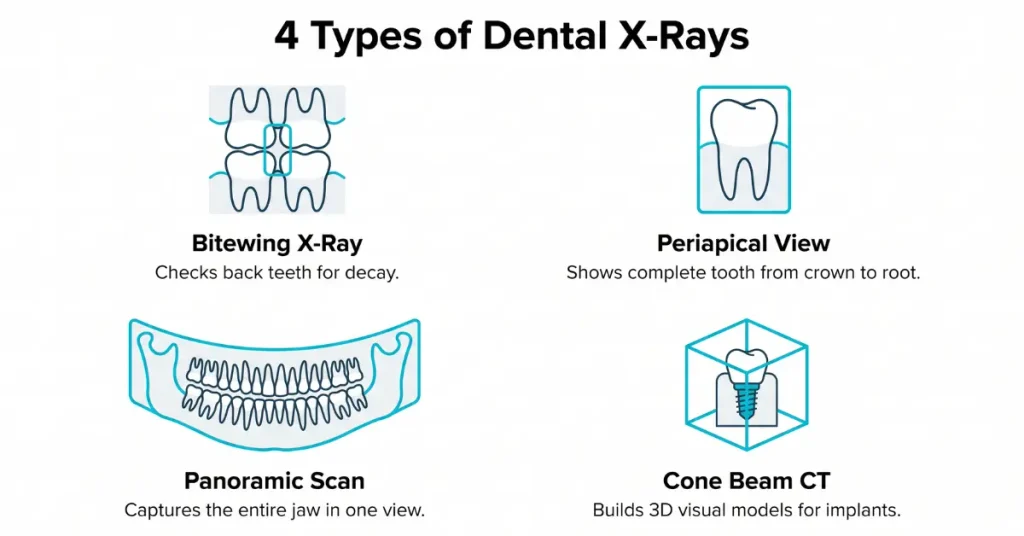
Four types cover most visits. Bitewings check the back teeth for decay. Periapical views show one tooth from crown to root. A panoramic scan captures your whole jaw. A cone beam CT (CBCT) builds a 3D view for implants and tricky cases.
Every oral exam with a Fort Myers dentist at McGregor Dental starts with a visual check. The images fill in the rest.
Are Dental X-Rays Safe for Fort Myers Patients?
Yes. The American Dental Association (ADA) says X-rays are safe when a dentist orders them for a clinical reason. Its January 5, 2026 recommendations are the first X-ray guidance from the group in more than a decade. They cover both 2-D and 3-D imaging.
Dentists follow ALARA, which stands for As Low As Reasonably Achievable. That means fewer images, taken only when they answer a real question. McGregor Dental applies that rule to each Fort Myers patient.
The dose is low, not zero. So the reason behind each image matters more than the count.
How Much Radiation Is in a Dental X-Ray?
One bitewing delivers 0.3 to 5 µSv, says McGill University. The U.S. Nuclear Regulatory Commission puts the yearly American average at 6,200 µSv, and half comes from nature. That works out to about 8.5 µSv of natural radiation each day.
Fort Myers neighbors who visit McGregor Dental often ask how dental X-rays compare with everyday radiation. This table shows each one against an ordinary day.
| X-ray type | Dose (µSv) | Days of nature |
|---|---|---|
| Bitewing | 0.3 to 5 | 0.04 to 0.6 |
| Panoramic | 7 | 0.8 |
| CBCT 3D scan | 34 | 4 |
Published numbers differ because machines, settings, and patient size vary. The panoramic and CBCT figures come from a hospital study of 9,680 scans in patients up to age 18. Digital sensors cut exposure compared with old film.
Do You Still Need a Lead Apron or Thyroid Collar?
No, most patients don’t. The ADA’s 2024 radiation report says thyroid collars and lead abdominal aprons are no longer necessary. Modern digital gear and tight beam control protect the rest of your body. Aprons can also block the beam and force a retake.
Some Lee County offices and older websites still promote shielding, so you’ll hear mixed advice. Ask us about our shielding policy before you visit our Fort Myers office. The team walks you through it.
How Often Should You Get Dental X-Rays?
Your dentist sets the schedule from your cavity risk and gum health. The ADA and FDA guidelines that Delta Dental summarizes give the gaps below. In January 2026, the ADA updated its advice, so expect your dentist to tailor them.
Months between bitewings, by cavity risk:
| Patient | Low | High |
|---|---|---|
| Children | 12 to 24 | 6 to 12 |
| Teens | 18 to 36 | 6 to 12 |
| Adults | 24 to 36 | 6 to 18 |
No single count fits everyone. The right amount is whatever your exam supports. New patients often get a full baseline set, and panoramic scans come about every five years.
McGregor Dental builds each schedule around personal risk, not the calendar, so Fort Myers families get only what they need.
Are Dental X-Rays Safe for Kids and Pregnant Patients?
Yes, with extra care. Growing tissue reacts more to radiation, so dentists image children based on cavity risk. A child with no decay often waits one to two years.
Pregnancy needs a clear reason. The ADA says its radiation recommendations apply to all patients, including pregnant ones. Routine screening often waits until after delivery, but pain or infection gets an image right away.
Tell your McGregor Dental dentist if you’re pregnant. The Fort Myers team helps you pick the next step together.
Do Dental X-Rays Cause Cancer?
Studies disagree, and the doses are very small. A pooled analysis of seven studies found no overall link between X-rays and meningioma, a tumor of the brain lining. The same analysis tied bitewings to a slightly higher risk.
A 2019 review from Brighton and Sussex Medical School reported an association with thyroid cancer and meningioma. Its authors warned that recall bias and missing dose data limit the results.
Those findings explain why McGregor Dental sticks to ALARA and skips routine repeats. Fort Myers residents get fewer, better-timed X-rays.
How Can You Keep Your X-Ray Exposure Low?
Five habits cut your dose at any office:
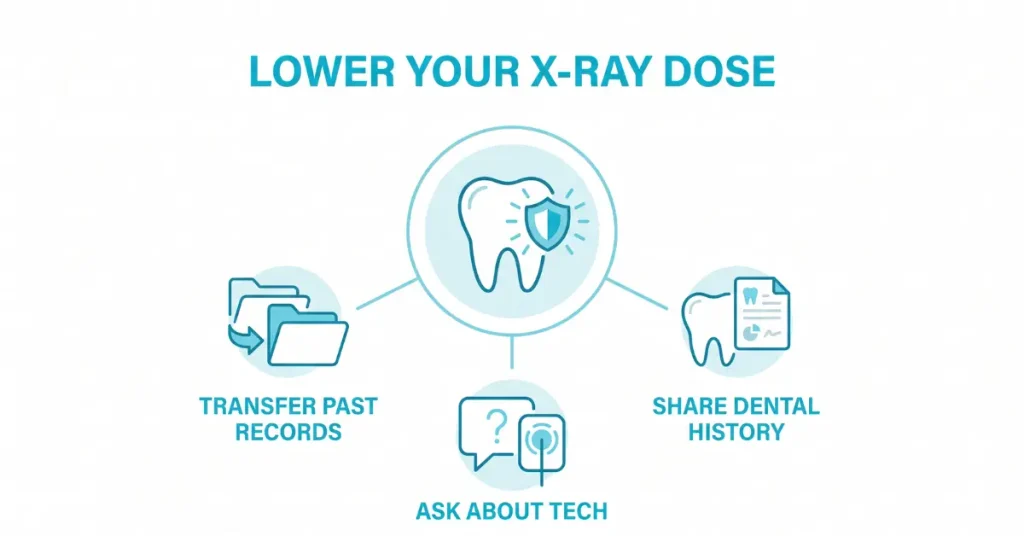
- Bring or transfer old X-rays to a new dentist.
- Share your cavity, gum, and treatment history.
- Ask why you need each image.
- Ask about digital sensors and rectangular collimation.
- Ask what happens if you skip one.
Write your questions down before the visit. Our McGregor Dental front desk requests past records for you, which spares Fort Myers locals a repeat scan.
Can You Say No to Dental X-Rays?
Yes, you can decline any X-ray. The tradeoff is real, though. Hidden decay, bone loss, and root infections don’t show up in a visual exam.
Some offices treat X-rays as standard of care and won’t treat without them. Learn what to expect first, then ask McGregor Dental about a middle path, such as one targeted image for one problem.
Ask for the smallest set that answers your dentist’s question. Every Fort Myers visit includes a clear talk about the risks.
Where Can You Get Dental X-Rays in Fort Myers?
You can get them at our McGregor Point office in Lee County, serving all of Fort Myers. The McGregor Dental team takes only the images your exam calls for.
A bitewing set takes a few minutes. Your dentist explains each result on screen, so you see what they see.
Bring your insurance card and any past X-rays. We pair every image with a full oral exam, so you never rely on guesswork.
Dental X-Ray FAQs
Yes, X-rays stay low risk when needed. Fort Myers visitors send McGregor Dental seven common questions, and we answer each one below in plain words.
How Many Dental X-Rays Are Safe in a Year?
No fixed number applies to everyone. Dentists apply ALARA and image only what you need. Higher-risk adults get them as often as twice a year.
Are Dental X-Rays Safe Every 6 Months?
Yes, if you have active decay or gum disease. Low-risk patients don’t need them that often, so your dentist checks your risk first.
Are Dental X-Rays Safe During Pregnancy?
Yes, for urgent problems like pain or swelling. Routine screening can wait for the baby to arrive.
Is a Panoramic X-Ray Riskier Than Bitewings?
Yes, slightly. It carries a higher dose than one bitewing, but both stay under one day of background dose.
Do Dental X-Rays Hurt?
No. The sensor sits in your mouth for a few seconds. Some patients find its edge bumpy.
Are Dental X-Rays Safe for Kids?
Yes, when their risk of decay calls for imaging. Kids without cavities get fewer sets.
Can I Refuse Dental X-Rays?
Yes. Ask your dentist what each image would show and the cost of waiting.
So, Are Dental X-Rays Safe? Here’s Your Next Step
Yes, dental X-rays are safe if your dentist follows ALARA and orders just the scans that help you. Ask questions, bring your past records, and pick a schedule built around your risk.
Every image should answer a question about your health. McGregor Dental serves Fort Myers and Lee County families with digital imaging and clear answers. Our team explains each image before you sit down. Call (239) 590-9919 to book your visit today.