
TL;DR
A regular cleaning (prophylaxis) removes plaque and tartar above the gumline and takes about 30 to 45 minutes. A deep cleaning (scaling and root planing) treats gum disease below the gumline and usually takes one to two hours across two visits. McGregor Dental in Fort Myers, FL recommends a deep cleaning when gum pockets measure 4mm or deeper.
Deep cleaning vs regular cleaning comes down to one thing: what’s happening under your gumline. A regular cleaning polishes the surface of healthy teeth. A deep cleaning, known as scaling and root planing, treats gum disease that has already taken hold below the gum tissue.
McGregor Dental at McGregor Point in Fort Myers, FL sees this question every week from patients who just left a hygiene appointment holding a treatment plan they didn’t expect.
What Is a Regular Cleaning (Prophylaxis)?
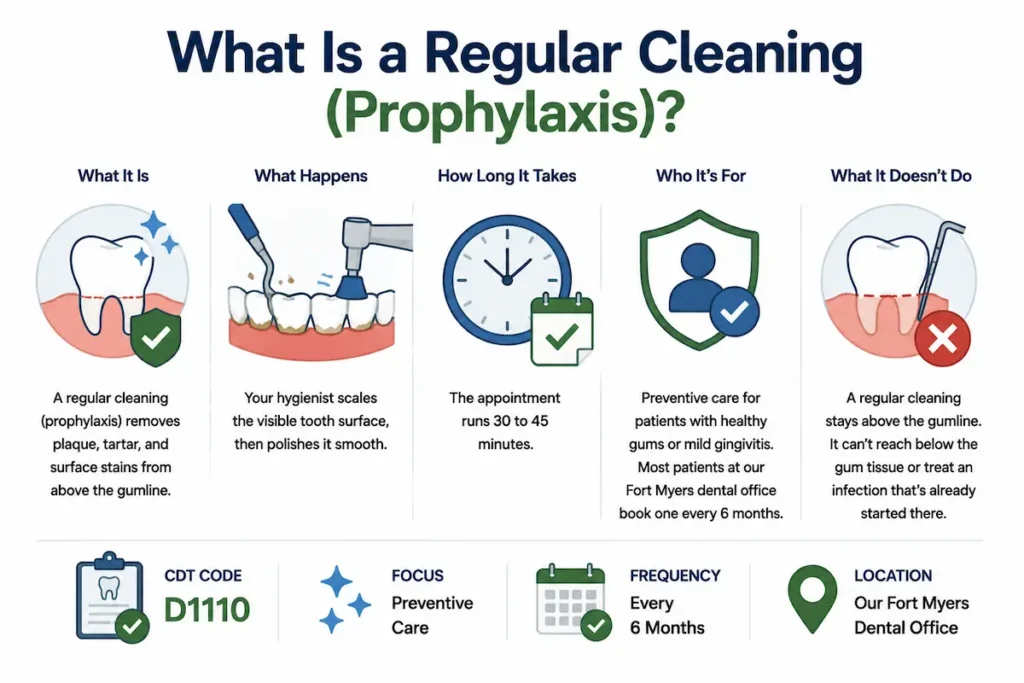
A regular cleaning, called a prophylaxis and billed under CDT code D1110, removes plaque, tartar, and surface stains from above the gumline. Your hygienist scales the visible tooth surface, then polishes it smooth. The appointment runs 30 to 45 minutes.
This cleaning is preventive. It’s built for patients with healthy gums or mild gingivitis. Most patients at our Fort Myers dental office book one every six months. Nothing about a regular cleaning reaches below the gum tissue, so it can’t treat an infection that’s already started there.
What Is a Deep Cleaning (Scaling and Root Planing)?
A deep cleaning, formally called scaling and root planing and billed under CDT code D4341 or D4342, removes plaque and tartar from below the gumline, down to the root surface. It treats active gum disease. It doesn’t maintain healthy gums; it repairs damaged ones.
The procedure happens in two steps. Scaling clears bacteria and tartar out of the periodontal pocket. Root planing smooths the root surface so gum tissue can reattach and heal. Your dental hygienist at McGregor Dental typically splits the mouth into quadrants and treats one or two per visit, with each quadrant taking 40 to 90 minutes.
Prophylaxis vs Deep Clean: Key Differences
The table below lays out how a regular cleaning, a deep cleaning, and periodontal maintenance compare.
| Prophylaxis | Scaling & Root Planing | Periodontal Maintenance | |
|---|---|---|---|
| Purpose | Prevent disease | Treat active gum disease | Manage treated gum disease |
| CDT Code | D1110 | D4341 / D4342 | D4910 |
| Depth | Above gumline | Below gumline, to the root | Above and below gumline |
| Frequency | Every 6 months | Once per 24 months per quadrant | Every 3 to 4 months |
| Typical Cost | $70 to $150 | $200 to $400 per quadrant | $100 to $180 |
| Anesthesia | None | Local anesthesia, usually | None or topical only |
Cost of Deep Cleaning vs Regular Cleaning
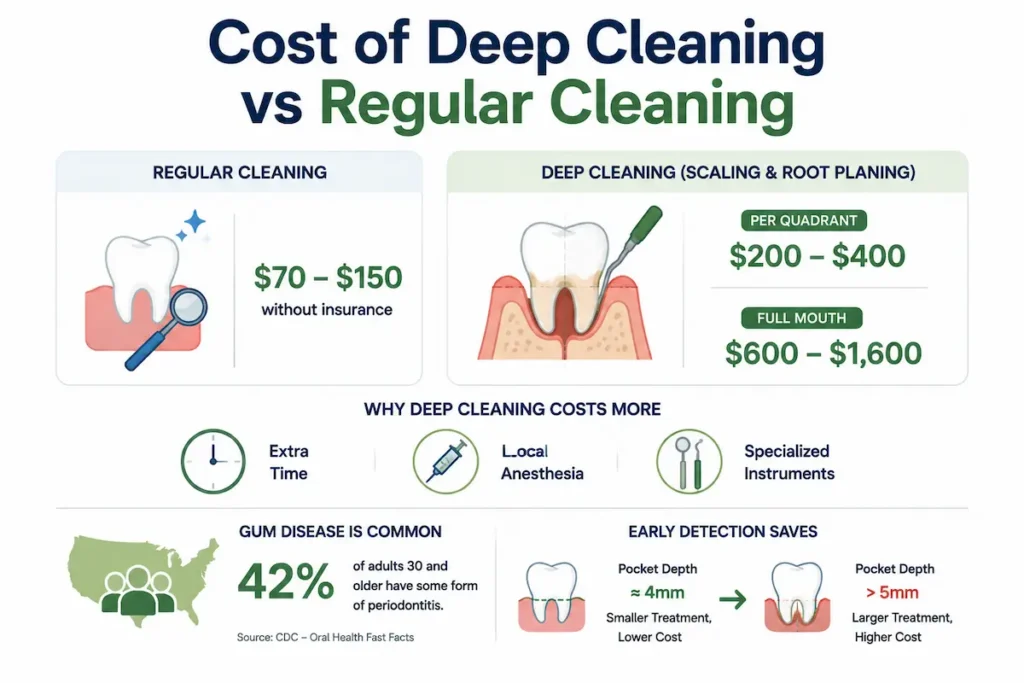
A regular cleaning costs $70 to $150 without insurance. Scaling and root planing runs $200 to $400 per quadrant, or $600 to $1,600 for a full mouth. The price difference reflects the extra time, the local anesthesia, and the specialized instruments a therapeutic procedure requires.
Gum disease is common enough that most patients will face this cost at some point. The Centers for Disease Control and Prevention reports that nearly 42% of adults 30 and older have some form of periodontitis. Catching it early, while pocket depths stay near 4mm instead of progressing past 5mm, keeps the treatment smaller and the cost lower.
What Happens During Each Procedure
A regular cleaning needs no anesthesia. Your hygienist scales and polishes your teeth in one visit, and you walk out ready for lunch. A deep cleaning is different. Your dentist numbs the treatment area with local anesthesia before scaling below the gumline, since root surfaces are more sensitive than enamel.
Numbness typically fades within two to four hours. Mild soreness and sensitivity to hot or cold can last one to three days afterward. Most patients manage this with over-the-counter pain relief and a soft-food diet for the first day. Call our Fort Myers office if soreness lasts longer than four days or if you notice swelling.
What Happens If You Skip a Recommended Deep Cleaning
Untreated gum disease doesn’t stay the same. It progresses. Pockets get deeper, bacteria spreads further under the gum, and the bone holding your teeth in place starts to break down.
Left alone, gingivitis advances into periodontitis. Teeth loosen. Eventually, extraction becomes the only option, and a single extraction runs $75 to $450 per tooth before replacement. Scaling and root planing costs far less than losing the tooth it’s protecting.
Aftercare and Recovery
- Stick to soft foods for the first 24 to 48 hours
- Rinse gently with warm salt water
- Brush carefully around treated areas, avoiding aggressive pressure
- Skip smoking, which slows gum healing
- Return every 3 to 4 months for periodontal maintenance once treatment finishes
Regular cleaning patients go back to a normal routine the same day and return in six months.
FAQ
Is scaling and root planing the same as a deep cleaning?
Yes. Scaling and root planing is the clinical name for a deep cleaning. It removes plaque and tartar from below the gumline and smooths the root surface, treating active gum disease rather than just maintaining a healthy mouth.
Is prophylaxis the same as a regular cleaning, or is it different from a deep clean?
Prophylaxis is the clinical name for a regular cleaning. It’s different from a deep clean because it only cleans above the gumline and is preventive, not therapeutic.
Does insurance cover scaling and root planing?
Most dental plans cover 50% to 80% of scaling and root planing once your dentist documents pocket depths of 4mm or more and bone loss on X-rays. Coverage details vary by plan, so check with your insurer before treatment.
How many appointments does a deep cleaning take?
Most deep cleanings take two appointments, treating one or two quadrants per visit. Full-mouth cases with severe gum disease sometimes need additional visits.
Does a deep cleaning hurt?
Your dentist numbs the area with local anesthesia before starting, so the procedure itself isn’t painful. Mild soreness for one to three days afterward is normal.
How often do I need a deep cleaning after treatment?
Once scaling and root planing is complete, most patients switch to periodontal maintenance cleanings every three to four months instead of the standard six-month schedule.
Schedule Your Cleaning at McGregor Dental in Fort Myers
Whether your exam points to a regular cleaning or a deep cleaning, McGregor Dental at McGregor Point walks you through exactly what your treatment plan means and why. We offer periodontal treatment for patients diagnosed with gum disease and preventative dental care to help you avoid it in the first place. Contact or call (239) 590-9919 to schedule your visit in Fort Myers, FL.