
No, a root canal does not hurt, because local numbing blocks the pain during treatment. Most patients say it feels a lot like getting a cavity filled.
So, does a root canal hurt at all? The infected tooth causes real pain. Your dentist removes the infection, and the ache leaves with it. Even the mention of a root canal makes many people nervous. Actually, root canals picked up a bad rap long ago, and that reputation stuck. Thanks to modern numbing and small tools, the visit looks very different today.
At McGregor Dental at McGregor Point in Fort Myers, FL, we treat infected teeth for patients from Cypress Lake, Iona, and Whiskey Creek. Many come in nervous and leave surprised at how easy it felt. This guide will set the record straight, so you know what to expect before you book.
TL;DR
• A root canal does not hurt during treatment because local numbing blocks the pain. Most patients say it feels like getting a cavity filled.
• The real pain comes from the infected tooth, not the treatment. A root canal removes the infection and stops the toothache.
• Mild soreness after a root canal usually lasts 2 to 3 days. Over-the-counter pain medicine and soft foods handle it for most people.
• Saving your natural tooth with a root canal protects your bite and jawbone. It also costs less than an implant or bridge in most cases.
• McGregor Dental in Fort Myers, FL, keeps root canals comfortable with careful numbing, a calm pace, and the same dentist every visit. Call (239) 590-9919 to book.
Why Do Root Canals Have Such a Bad Name?
Root canals have a bad name because the infection hurts before treatment, and people blame the fix.
Most myths surrounding root canal treatment grew from two things: real infection pain and old methods. Neither one matches how dentistry works today.
The Pain Starts Before the Visit
A deep cavity, crack, or injury lets germs reach the pulp. The pulp is the soft nerve tissue within the tooth. Once a tooth infection sets in, swelling builds pressure inside the tooth. That pressure causes a throbbing toothache. Some patients also develop an abscess that needs to drain. So the pain associated with root canals usually comes from the infection, not the treatment.
Old Methods Created Old Stories
About a century ago, numbing and dental tools were far less advanced. Many myths that surround root canals started back then. Today, dentists use stronger anesthetic, thin flexible files, and digital X-rays. The American Association of Endodontists puts the number of root canals performed each year at about 15 million.
The AAE also keeps a simple guide to common root canal myths, written by root canal specialists.
Root Canal Myths vs Reality
Most root canal myths come from old methods and secondhand stories, not today’s treatment.
If you’ve ever asked, “Does a root canal hurt as much as people say?” these myths about root canals are why. There’s plenty of misinformation about root canals online, and it keeps people from the care they need. Here are the root canal myths we hear most. Debunking them starts with facts, and the facts help you walk in calm.
Myth 1: “A Root Canal Is the Most Painful Dental Visit”
The belief that root canals are painful is the biggest misconception. Many people mistakenly believe the procedure is painful. With proper numbing, most patients compare it to a normal filling. Some even call it painless. The treatment works to relieve pain, not cause it.
Myth 2: “You’ll Feel Everything During Treatment”
Once the tooth is numb, you should not feel pain. At McGregor Dental, we check the numbness before starting. You’ll still notice pressure and tool sounds. If you feel any pain, raise your hand, and we add more numbing.
Myth 3: “Pulling the Tooth Is Easier and Cheaper”
A tooth extraction is not always less painful, and it leaves a gap. Most people then need a dental implant or bridge. That means more visits and more cost. In most cases, it’s better to save the tooth you have.
Still deciding between the two? Read Root Canal or Extraction? How to Decide.
Myth 4: “Root Canals Make You Sick”
This idea came from early 1900s studies based on outdated methods. Later research found serious flaws and helped discredit those studies. The American Dental Association and endodontists both say no scientific evidence links root canals to disease. Removing an infection helps your overall health.
| Myth | Reality |
| It’s the most painful dental visit. | It feels close to a regular filling. |
| You feel everything. | Numbing blocks pain, so you feel only pressure. |
| Pulling the tooth is easier. | Extraction leaves a gap that costs more to fix. |
| Root canals make you sick. | No scientific evidence supports this. |
Does a Root Canal Hurt During the Procedure? Here’s Each Step
No, the procedure does not hurt, because your dentist numbs the tooth before any work starts.
Knowing the steps takes away the fear of the unknown. Root canal therapy also called endodontic treatment typically follows these steps:
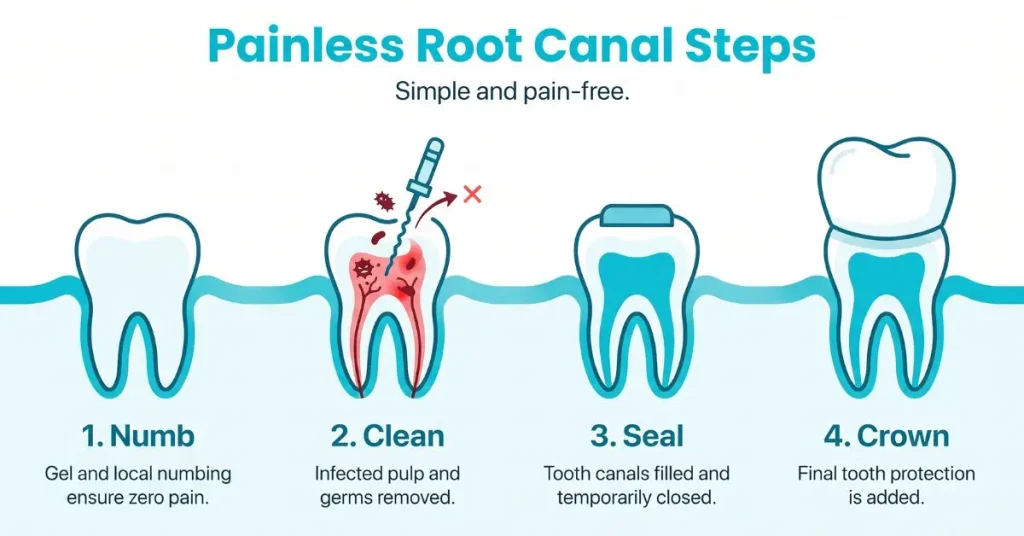
• Numbing: Once you settle into the dental chair, the dentist applies numbing gel. A small shot follows, and you’ll feel a quick pinch.
• Access: The dentist makes a small opening on top of the tooth.
• Cleaning: Thin files reach each canal. This step removes the infected pulp and germs.
• Sealing: The dentist fills the canals and closes the top with a temporary filling.
• Crown: A crown usually goes on at a later visit to protect the tooth.
Most root canal procedures finish in one visit of about 60 to 90 minutes. Molars with more canals sometimes need a second visit. Like most dental procedures, the numbing shot is often the only part people feel.
Badly infected teeth can be harder to numb. In that case, your dentist gives extra numbing and waits a few more minutes. That extra step keeps the visit pain-free.
MedlinePlus, from the U.S. National Library of Medicine, explains each root canal treatment step in plain language.
How Long Does Root Canal Pain Last After Treatment?
Mild soreness after a root canal usually lasts two to three days and fades each day.
Cleaning the canals irritates the tissue around the root. That tissue needs a few days to calm down. If you’re wondering whether a root canal hurts the next day, expect tenderness, not sharp pain.
| Time After Treatment | What You’ll Likely Feel |
| First few hours | Numbness wears off, and a dull ache starts |
| Days 1 to 3 | Mild root canal pain when chewing |
| End of week 1 | Most people feel back to normal |
Home care tips:
• Eat soft foods like eggs, yogurt, or rice.
• Chew on the other side until your crown is in place.
• Take over-the-counter pain medication as your dentist directs.
• Skip crunching ice from your sweet tea for now.
Call your dentist if you notice swelling, a fever, or pain that grows after day 3. A loose temporary filling also needs a quick check.
A root canal can sometimes fail to heal or become reinfected, even months or years later. In many cases, retreatment can still save the tooth, so call your dentist if symptoms return.
For a full visit guide, read Root Canal Treatment What to Expect.
What Are the Long-Term Benefits of a Root Canal?
A root canal lets you keep your own tooth, which protects your bite and jawbone. A successful root canal treatment allows you to chew and smile normally again. Our team always tries to save your natural tooth before we talk about removal. Here’s why it pays off:
• You keep your natural tooth: A natural tooth fits your bite better than any replacement.
• Nearby teeth stay put: With no gap, the teeth around it don’t drift.
• Your jawbone stays strong: The tooth root keeps the bone in that spot active.
• It can last a lifetime: Brushing, flossing, and regular dental care keep it healthy.
• It often costs less: An implant or bridge usually needs more visits and more money.
When it comes to root canal treatment versus replacement, the chance to keep your natural smile usually wins.
What Are the Signs You May Need a Root Canal?
Lingering hot or cold pain, gum swelling, a gum pimple, or a darkening tooth can signal infection.
Watch for these signs:
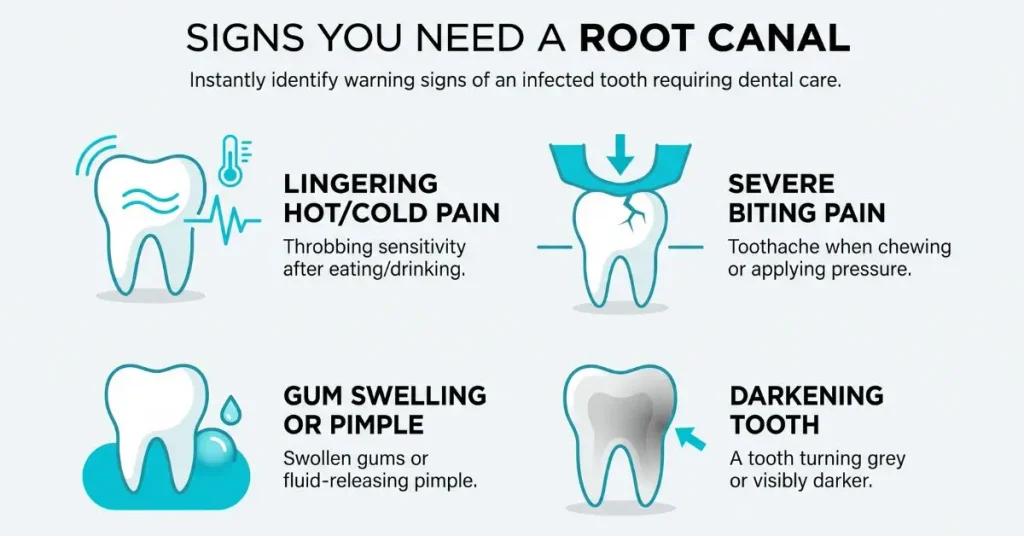
• Tooth pain from hot or cold foods and drinks that lingers long after they are gone
• A severe toothache when you chew or bite
• Swelling in the gum or face
• A small pimple on the gum that leaks fluid
• A tooth that turns grey or darker
In Fort Myers, iced tea and cold drinks are part of daily life most of the year. If one cold sip leaves your tooth throbbing for several minutes, book a checkup. Biting hard things, like ice or stone crab shells, can also crack a tooth and let germs in. Antibiotics can calm swelling for a short time, but they can’t clean infected pulp. Waiting usually lets the infection spread further. The National Institute of Dental and Craniofacial Research explains how tooth decay starts and spreads.
How McGregor Dental Keeps Root Canals Comfortable in Fort Myers
Our Fort Myers office keeps root canals comfortable with careful numbing, a calm pace, and one familiar dentist.
Patients from Cypress Lake and Fort Myers Beach often ask us, ‘Does a root canal hurt here?” Our answer comes from how we run each visit. McGregor Dental sits at 15271 McGregor Blvd, Suite 21, in the McGregor Point area.
• Same dentist every visit: You see Dr. Jeffrey Bourne each time, not a rotating staff.
• Advanced training: Dr. Bourne completed an Advanced Education in General Dentistry residency.
• A calm pace: We explain each step and pause when you need a break. This keeps patients comfortable.
• Private practice: We are not a corporate chain, so you get real time with your dentist.
• Payment help: CareCredit lets you spread the cost over monthly payments.
• Seasonal planning: If you live here part of the year, we can plan your crown visit before you head north.
Some complex cases need an endodontist. If your tooth needs one, we’ll tell you plainly. Our general dentistry page covers root canals, exams, extractions, and other care for your oral health.
An endodontist is a dentist who has completed two or more years of added training beyond dental school and focuses on root canal treatment.
How Much Does a Root Canal Cost in Fort Myers?
The cost depends on the tooth and on whether it needs a crown afterward.
We accept all PPO insurance plans, and our front desk can check your coverage before your visit. CareCredit is also available if you prefer monthly payments. Call (239) 590-9919 for a written quote after your exam.
Root Canal Pain FAQs
These are the questions Fort Myers patients ask us most about root canal pain.
Is Root Canal Painful if the Tooth Is Badly Infected?
It shouldn’t be. Infected teeth can take longer to numb, so your dentist adds extra numbing and waits before starting. Once the tooth is fully numb, you should feel only pressure, not pain. If anything feels sharp during the visit, tell your dentist right away.
Am I Awake During a Root Canal?
Yes. You stay awake, and the numbing only affects the tooth area. Many patients listen to music or podcasts during the visit. You can raise your hand at any point if you need a break or more numbing, and your dentist will pause and check how you feel.
Does a Root Canal Hurt Without Numbing?
Yes, it would hurt without numbing. That’s why dentists always numb the tooth first. With numbing, you feel pressure instead of pain. Modern local anesthesia blocks the nerves that send pain signals, so the cleaning and sealing steps stay comfortable from start to finish.
Can I Go Back to Work After a Root Canal?
Yes. Most people return to work the same day. Pack a soft lunch and chew on the other side until your crown is in place. Mild soreness is normal for a few days, and over-the-counter pain medicine usually handles it. Call your dentist if pain or swelling grows.
Do I Need a Crown After a Root Canal?
Back teeth usually need a crown after treatment because they handle heavy chewing. A crown protects the treated tooth from cracking and restores its strength. Front teeth sometimes need only a filling. Your dentist checks the tooth and tells you what it needs. Learn more about restorative dentistry and treatments to repair and protect damaged teeth to understand the options available for restoring your smile.
How Long Does a Root Canal Take?
Most root canals take 60 to 90 minutes. Molars with several canals sometimes need a second visit to finish. A crown usually goes on at a later visit. Your dentist can give you a clearer time estimate after an exam and X-rays of your tooth.
What Happens If You Skip a Root Canal?
An infected tooth does not heal on its own. The infection can spread, causing more pain, swelling, and an abscess, and you may lose the tooth. Antibiotics can calm swelling for a short time, but they can’t clean infected pulp. Call early to save your tooth.
Stop the Tooth Pain, Not the Visit
A root canal stops tooth pain instead of causing it, so call before the infection spreads. If you’re still asking “is a root canal painful?“ remember that the real pain comes from waiting. Good information about root canals helps you choose care over fear. McGregor Dental at McGregor Point welcomes Fort Myers patients who want gentle, honest care. Call McGregor Dental at (239) 590-9919. Schedule an appointment today, and let us relieve your pain while saving your natural tooth.