
Holiday gatherings, family photos, and winter visitors put your smile on display, and the end of the year is also when many dental plans reset. A holiday-ready smile starts with an exam and cleaning, followed by any needed treatment and, if you want it, whitening, which needs lead time before your first event.
Book in early November, because most dental plans end on December 31 and unused benefits do not roll over for most plans. At McGregor Dental at McGregor Point in Fort Myers, we offer general, restorative, and cosmetic dentistry, so you can plan all of it in one place.
TL;DR
- Start with an exam and cleaning. Most plans typically pay 100 percent for preventive visits.
- Finish pending treatment before your plan year ends. Benefits do not roll over for most plans.
- Plan whitening early. Whitening needs lead time, and sensitivity can appear within two to three days.
- Check your deadline. Most plans end December 31, but some end at other times.
- Seasonal residents: Request records from your home dentist before you arrive.
What does a holiday-ready smile need?
A holiday-ready smile needs a clean, healthy base, any pending treatment finished, and cosmetic touch-ups timed ahead of your first event. Work through the checklist in this order:
- General dentistry exam and cleaning. This sets the baseline and shows which work, if any, is time-sensitive.
- Pending treatment. Fillings, crowns, and other planned work should be scheduled while your benefits are still active.
- Whitening or cosmetic dentistry. Book a consultation early, because the timeline depends on the method you choose.
Why start with an exam and cleaning?
Start with an exam and a regular or deep cleaning, because it is the simplest covered visit and the foundation for everything else. The American Dental Association’s MouthHealthy site says most plans typically pay 100 percent for preventive visits. It also advises making appointments early so you can take care of them before the holidays.
Ask for a treatment plan at the same visit so you can see which work to schedule next.
Can you whiten before holiday photos and gatherings?
Yes, if you start early enough to finish with a buffer before your first event. A cleaning first can help, because the American Dental Association (ADA) says surface stains from coffee, tea, and red wine often respond to brushing with whitening toothpaste or a professional cleaning. Whitening also has two limits. The ADA says sensitivity from strips or trays can begin within two to three days and usually resolves by day four, so plan to finish several days before the event. The ADA also says only natural teeth whiten, and crowns and other restorations keep their shade, which can leave a visible mismatch. Your dentist should identify any restorations during your exam.
Count back from your first event. Thanksgiving falls on Thursday, November 26, and Christmas falls on Friday, December 25. Our guide to when to start teeth whitening before an event explains the timeline for in-office treatment and take-home trays.
Which treatment should you finish before the year ends?
Finish any treatment you have already started, such as a filling or crown, before your plan year closes. If you have pending restorative dentistry work, schedule the remaining visits now, because benefits do not roll over for most plans. MouthHealthy advises confirming coverage with your dentist’s office, your plan’s phone line, or its website before you book.
When do dental benefits expire?
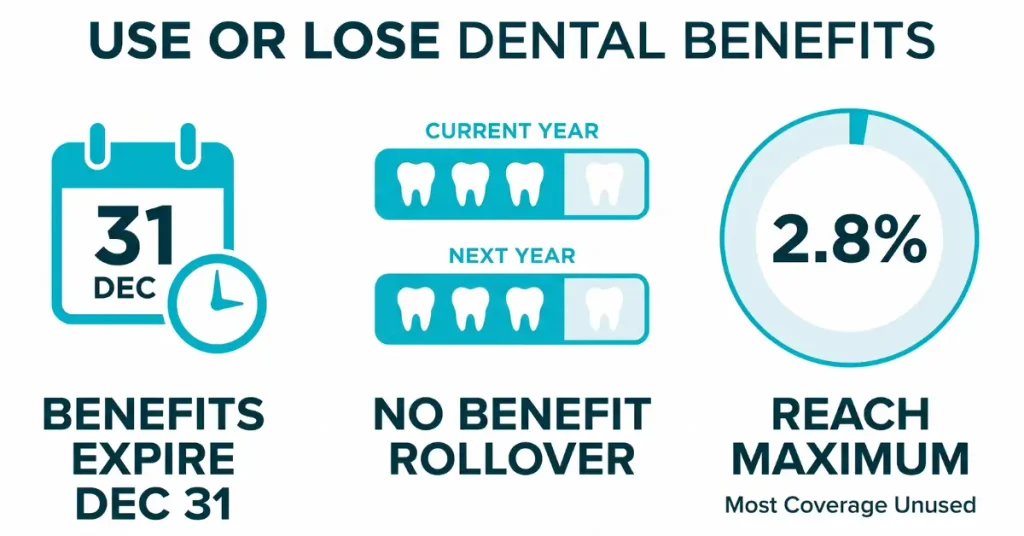
Most dental plans run on the calendar year, so benefits usually end on December 31. MouthHealthy says plans will most likely run out on that date, that some plans end at other times, and that unused benefits do not roll over into the new year for most dental plans. Check your plan documents or ask your employer for your exact date.
Ask your plan two questions: when your plan year ends, and whether your deductible and annual maximum both reset on that date.
For most patients, the bigger risk is leaving covered visits unused, not missing a maximum. MouthHealthy cites National Association of Dental Plans data showing that only 2.8 percent of PPO dental plan participants reached or exceeded their annual maximum.
How much time is left before year end?
From November 2 through December 31, 2026, there are 44 weekdays, and our office is open Monday through Friday, 8:00 a.m. to 4:00 p.m. We are closed on weekends, so every appointment has to fit into those weekdays. Thanksgiving and Christmas both fall on weekdays, so the practical number is lower.
| When | What to do |
| Now through mid-November | Book your exam and a regular or deep cleaning, ask for a treatment plan, and schedule a whitening consultation if you want one |
| Late November | Start any treatment that takes more than one visit |
| Early December | Finish treatment, and use any remaining FSA funds |
| Mid to late December | Keep as a buffer for rescheduling, not as your first appointment |
Book early so a missed or rescheduled visit still has room to land before December 31.
How does an FSA change your deadline?
If you have a flexible spending account (FSA), your deadline is usually December 31 as well. According to MouthHealthy, you generally must use the money within the plan year, and employers may offer either a grace period of up to two and a half extra months or a carryover of up to $500. Money you do not spend by the deadline is forfeited. Ask your employer which option your plan uses.
MouthHealthy also says most FSA accounts cannot be used for cosmetic procedures such as whitening, veneers, or cosmetic braces. Confirm that a treatment is eligible before you schedule it.
What should seasonal residents do before they schedule?
Schedule an exam early in your stay, and request your records from your home dentist before you travel. Ask for recent X-rays and your current treatment plan. HHS says a doctor normally has up to 30 days to provide a copy of your health information and often can do it sooner, so ask your home dentist’s office how long theirs takes.
Check two more details before you book. First, confirm that your plan covers care in Florida. Second, confirm your plan year end date, because that sets your deadline wherever you live. If you started treatment up north, bring that treatment plan and tell us how long you will be in town, so visits can be planned within your stay.
Holiday smile FAQs
When should I book my year-end dental visit?
Book in early November if you can. MouthHealthy advises making appointments early so you can handle them before the holidays, and early booking leaves room for a second visit if your treatment needs one.
How long before holiday photos should I whiten my teeth?
Finish several days before the event. The ADA says sensitivity from strips or trays can begin within two to three days and usually resolves by day four. Our whitening timeline guide covers the full schedule for in-office treatment and trays.
Do unused dental benefits roll over?
For most dental plans, no. MouthHealthy says unused benefits do not roll over into the new year for most plans. Check your plan documents for your own rules.
Is a cleaning covered before year end?
Most plans typically pay 100 percent for preventive visits, according to MouthHealthy. Confirm your coverage with your plan before you book.
Can I use an FSA for teeth whitening?
Generally, no. MouthHealthy says most FSA accounts cannot be used for cosmetic procedures such as whitening, veneers, or cosmetic braces. Ask your plan administrator about your account.
Plan your holiday smile at McGregor Dental
Call McGregor Dental at McGregor Point at (239) 590-9919 to schedule your visit. We are at 15271 McGregor Blvd #21, Fort Myers, FL 33908, open Monday through Friday, 8:00 a.m. to 4:00 p.m. Bring your plan details and, if you are a seasonal resident, your records from home, so we can map out what to book before the year ends.
Have questions first? Reach out to our team with your plan year end date and your first event date.